EV charging in the Philippines: home and public costs
Reviewed . General information, not legal or financial advice.
This guide is for anyone who owns or is about to buy a battery electric car or plug-in hybrid in the Philippines. It covers home charging, public networks and their prices, how long charging takes, plug types and how to plan longer trips. Electricity and charging prices moved several times in 2026, so every figure below carries its date.
- Meralco typical household rate, November 2026
- ₱15.55/kWh
- DOE national average for public DC charging, March 2026
- ₱30.15/kWh
- Active public charging stations listed by the DOE (April 2026)
- 1,500+
- Typical DC fast charge from 30% to 80% (BYD Atto 3)
- ~30 min
How much does it cost to charge an EV at home?
Home charging costs whatever your utility charges per kWh, plus about 10% lost as heat during charging. For a Meralco household, that was ₱15.551 per kWh in November 2026, up ₱0.4895 from October, according to Meralco's monthly announcement.
Worked example: BYD Atto 3 Dynamic
| Step | Figure |
|---|---|
| Battery capacity | 49.9 kWh |
| Energy into the battery, 0 to 100% | 49.9 kWh × ₱15.551 = ₱776 |
| With about 10% charging losses | about ₱854 |
| Claimed range | 410 km |
| Cost per km at claimed range | about ₱2.08 |
| Cost per km, assuming 15% less range in real driving | about ₱2.45 |
In practice you rarely charge from zero. Topping up from 20% to 80% puts in about 30 kWh, roughly ₱510 at the November rate.
For a monthly budget, multiply your distance by your car's consumption. At about 15 kWh per 100 km, 1,000 km a month uses roughly 150 kWh, or about ₱2,300 on top of your normal bill. Meralco's "typical household" rate is quoted for a 200 kWh home; your effective rate also depends on total consumption, taxes and any refunds on your bill, so look at the per-kWh total on your own statement.
Outside Metro Manila, use your electric cooperative's or utility's current residential rate in the same formula.
What do you need to install a home charger?
Most buyers install a wall-mounted AC charger (often called a "wallbox" or Level 2 charger) on its own circuit. Many brands include one with a new EV, but installation is often billed separately; check this line on the quote (see how to read a price list).
Check your service
Have a licensed electrical engineer or electrician look at your main breaker, panel and Meralco service size. A 7 kW charger draws about 32 amps for hours at a time.
Pick the location
Choose a covered, ventilated spot near where the car's charging port will sit. Measure the cable reach.
Run a dedicated circuit
The charger should have its own breaker and correctly sized wiring, with proper earthing and residual-current protection.
Get permits if required
Ask your city or municipal engineering office whether an electrical permit is needed. Condos need written admin approval first.
Upgrade service if needed
If the load is too high for your current service, apply to Meralco or your utility for an upgrade before installation.
Test and register
Test a full session, then register the charger with the brand if a warranty or app depends on it.
We could not find a Meralco rule written specifically for home EV chargers, so treat the charger like any other large new load: the electrician's assessment decides whether your existing service is enough. Buy equipment that carries the DTI Bureau of Philippine Standards mark, since EV charging equipment is under mandatory certification.
Portable charger vs wallbox
| Option | Typical power on 230 V | Time to add 50 kWh | Best for |
|---|---|---|---|
| Portable cable on a standard outlet | about 2 to 3 kW | 17 to 25 hours | Occasional top-ups, PHEVs |
| Wallbox, single phase | up to about 7.4 kW | about 7 hours | Overnight charging for most BEVs |
| Wallbox, three phase (if available) | 11 kW or more | under 5 hours | Big batteries, commercial sites |
Times are simple arithmetic (energy ÷ power) and ignore the slower final 10% of a charge. The car's own onboard charger also caps AC speed: BYD lists 2.5 hours for its Seal 5 DM-i plug-in hybrid from 15% to full, and 7 to 7.5 hours for the Atto 3 Dynamic from empty.
Where can you charge an EV in public, and how much does it cost?
Public charging is widely available in Metro Manila malls and along main expressways, and thinner in the provinces. The DOE reported a national average of ₱24.03 per kWh for public AC charging and ₱30.15 per kWh for DC charging as of 31 March 2026, and lists more than 1,500 active public stations.
Rates reported by Top Gear Philippines in April 2026:
| Network | AC rate | DC rate | Notes |
|---|---|---|---|
| ACMobility (Ayala) | ₱22 to ₱28.50 per kWh | about ₱35 per kWh | 7 to 22 kW AC, DC up to 150 kW; Ilocos Norte to Zamboanga |
| Tesla | ₱16 per kWh (Destination) | ₱19 per kWh (Supercharger) | Up to 250 kW; Tesla owners; select Metro Manila sites |
| SM Supermalls | Free at the time | Free at the time | Mostly 7.4 kW AC, 80 kW DC at select malls; 3-hour cap |
| V-Green (VinFast) | Free for VinFast owners | Free for VinFast owners | Until 31 March 2029; mostly Rizal for now |
Prices change, and free promotions end. Check the operator's app for the live rate, and note whether a site charges per kWh, per minute or a flat session fee.
How long does it take to charge an EV?
Charging time depends on the charger's power, the car's maximum accepted power and how full the battery is. Fast charging slows sharply above 80%, which is why brands quote 30% to 80% times.
| Car (BYD figures) | Battery | AC, 0 to 100% | DC, 30 to 80% | Max DC power |
|---|---|---|---|---|
| Atto 3 Dynamic | 49.9 kWh | 7 to 7.5 hours | about 30 min | 70 kW |
| eMAX 7 Standard | 55.4 kWh | about 9 hours | about 30 min | 89 kW |
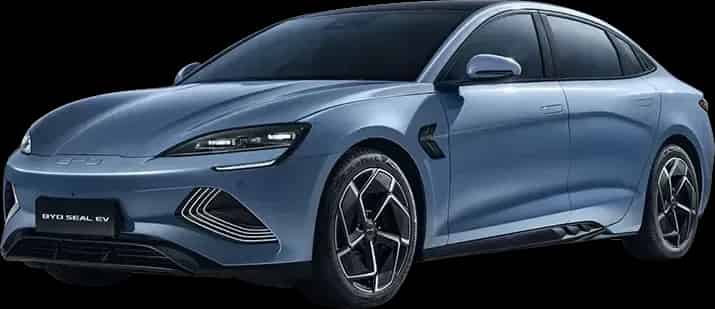
| Seal Performance | 82.6 kWh | about 16 hours | about 30 min | 150 kW |
A 150 kW public charger does not make a 70 kW car charge faster; the lower number wins.
Which charging connector does your EV use?
Most new EVs and public chargers in the Philippines use Type 2 for AC and CCS2 for DC. DPWH's 2025 charging equipment specification calls for Type 2 connectors with CCS2 support, and trade press reported in 2024 that the DOE settled on CCS2 for public chargers.
| Connector | Used for | Where you will see it |
|---|---|---|
| Type 2 (Mennekes) | AC charging | Home wallboxes, mall and hotel chargers |
| CCS2 | DC fast charging | Most new EVs and fast chargers, including Tesla in the Philippines |
| GB/T | AC and DC (Chinese standard) | Some grey-market or China-spec imports; may need an adapter |
| CHAdeMO | DC fast charging | Older Nissan Leaf; few public units |
Before buying an imported or second-hand EV, confirm its ports match the chargers you plan to use.
How do you plan range for longer trips?
Plan on 80% to 85% of the claimed range, keep a buffer of at least 15%, and know where your fast chargers are before you leave.
- Claimed vs real range. Philippine price lists often quote NEDC figures, which are generous. Highway speeds, full aircon, passengers and hills all cut range.
- Charge to 80% on the road. It is much faster than waiting for 100% and protects your schedule.
- Have a backup. Save two charger locations per leg, since a unit may be busy or offline.
- Use apps. Network apps show live availability and price.
If long drives matter, start with the longest-range electric cars or browse every electric car. Electric scooters and motorcycles are in electric motorcycles.
What about charging at a condo or office?
The EV law gives you some leverage. RA 11697 requires new buildings with 20 or more parking slots to dedicate at least 5% of them to EVs, and says existing buildings must comply within the timeline set by the government's EV charging roadmap. Select gasoline stations must also set aside space for chargers. Ask your building administrator for written rules on who pays for the installation and how electricity is billed back to you.
EV owners also skip number coding in Metro Manila; the DOE confirmed in October 2025 that the exemption is automatic.
Questions and answers
How much does it cost to fully charge an electric car in the Philippines?
At Meralco's November 2026 typical household rate of ₱15.55 per kWh, a 50 kWh battery costs about ₱780 to fill from empty, or roughly ₱850 including charging losses. At a public DC fast charger priced around ₱30 to ₱35 per kWh, the same charge costs about double.
Can I charge an EV from a regular outlet at home?
Yes, most EVs come with a portable charging cable for a standard outlet, but it is slow, often a full day or more for a 50 kWh battery. Have an electrician confirm the outlet and circuit can handle hours of continuous load before relying on it.
Are SM mall EV chargers free?
Top Gear Philippines reported in April 2026 that charging at SM Supermalls stations was free, with sessions capped at three hours. Free charging promotions can end at any time, so check the mall or the charging app before you go.
What charging plug do EVs in the Philippines use?
Most new EVs sold in the Philippines use Type 2 for AC charging and CCS2 for DC fast charging, which is also what most public chargers offer. Some China-market imports use GB/T, and older Nissan Leafs use CHAdeMO.
Will installing an EV charger raise my Meralco bill?
Yes, by the electricity you put into the car. Driving 1,000 km a month at about 15 kWh per 100 km adds roughly 150 kWh, or about ₱2,300 at the November 2026 typical rate. Your actual rate depends on your total consumption and taxes on the bill.
Do condominiums have to provide EV charging?
RA 11697 requires new buildings with 20 or more parking slots to set aside at least 5% of them for EVs, with charger installation timed under the government's EV charging roadmap. Existing condos follow a later timeline, so ask your building admin what is planned.
Sources
- Philstar: Meralco rates rise in November (14 November 2026)
- Rappler: Meralco rates up in November 2026
- Top Gear Philippines: EV charging station cost comparison (22 April 2026)
- Manila Bulletin: EV charging network expands as DOE pushes clean transport (10 April 2026)
- Republic Act No. 11697, Electric Vehicle Industry Development Act, Sections 17 to 19 (Lawphil)
- DPWH Department Order No. 135, s. 2025: specification for EV charging equipment
- CarGuide.PH: Department of Energy clamps down on charging standards (May 2024)
- DTI Bureau of Philippine Standards: EV charging equipment under mandatory certification
- BYD Cars Philippines: Atto 3 specifications
- BYD Cars Philippines: price list and spec sheets
- Power Philippines: DOE clarifies EVs automatically exempt from number coding (8 October 2025)